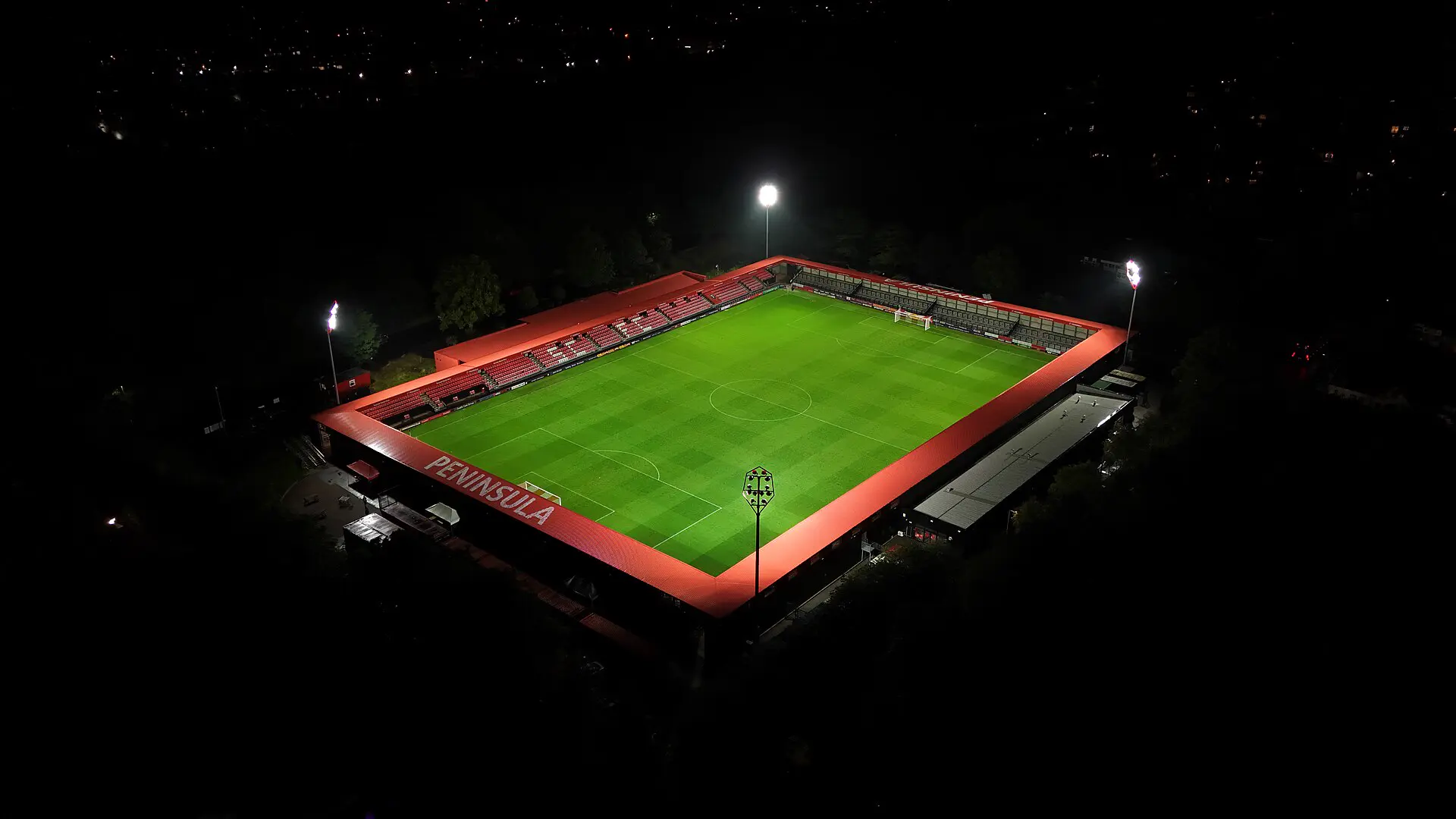
Why the Maintenance Factor Decides Lux Levels Five Years On
Commissioning compliance is not long-term compliance; the maintenance factor, read from LM-80 and L70 data, determines whether a venue still meets lux minimums years later.
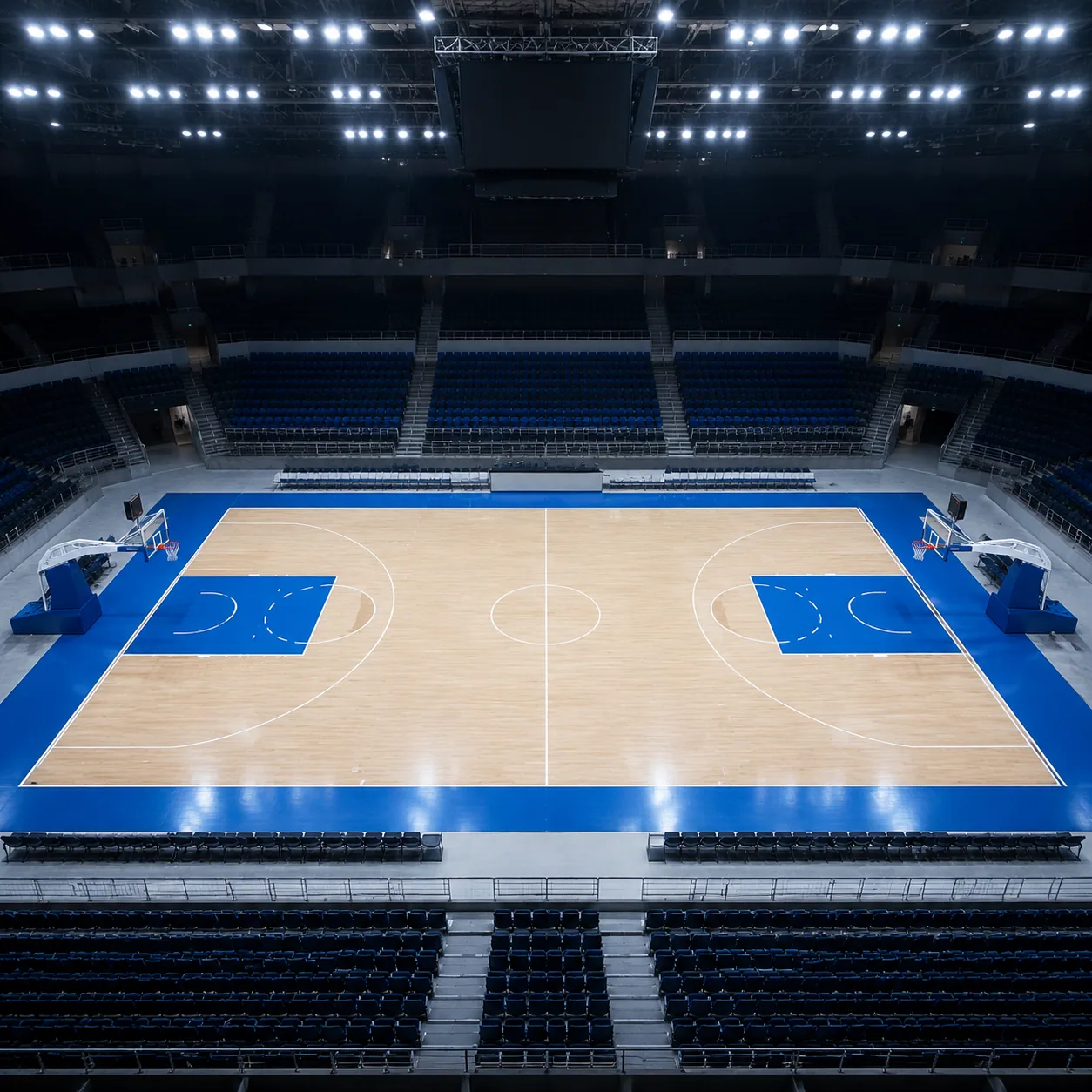
A single parameter is routinely skipped during design review, and it is quietly pushing venues below their sporting lux minimums three to five years after commissioning. It is the maintenance factor, usually abbreviated MF.
What the maintenance factor actually means
MF = illuminance at end of design life ÷ initial illuminance.
In plain terms: if a newly installed system reads 100 at day one, the fraction of that output still present after several years of use is the maintenance factor. Industry practice typically lands between 0.7 and 0.8, meaning the design already assumes the installation will eventually deliver only seventy to eighty percent of its initial output.
The point that matters is how it is applied. Two approaches, side by side, make the gap obvious.
Two design approaches, same day-one result
Approach A ignores the maintenance factor. The designer selects luminaires directly against the sporting requirement, say an average of 500 lux on the field of play. Initial illuminance comes out at 500, the commissioning measurement reads 500, the venue passes, the report is signed.
Approach B applies MF = 0.75. For the same 500 lux end-of-life target, the designer raises the initial illuminance to 667 (500 ÷ 0.75), which means higher wattage or more luminaires. The commissioning measurement reads 667 and also passes.
Both systems are compliant on commissioning day. The difference appears on the timeline.
After four years, the luminaires in Approach A have depreciated to around seventy percent of initial output. 500 becomes 350, which falls below the sporting minimum. A re-test fails, triggering remediation or re-procurement.
In Approach B the same depreciation applies, but 667 falls to 500 and the venue still meets its requirement.
The reversal comes down to one decision taken during design: whether a realistic maintenance factor was chosen. Approach A treated commissioning as the finish line and assumed constant output. Approach B accepted that LED output declines and reserved that decline inside the design margin from the start.
Same sporting requirement, same depreciating LEDs, same four years. One fails, one passes. That is not a product difference, it is whether the design paid for future lumen depreciation on day one.
Where the maintenance factor comes from
The factor should be derived from a supplier's lifetime data, not from a verbal promise. Two documents carry the evidence.
L70 is the operating time needed for luminous flux to fall to seventy percent of initial output. An L70 of 60,000 hours means output reaches seventy percent at roughly 60,000 hours of use. It answers when the system reaches its critical threshold.
The LM-80 report records measured lumen maintenance of the LED source over time. It contains a depreciation curve giving the percentage of initial output at defined time points. Read that curve against the venue's daily operating hours, and you can calculate the remaining output percentage at the target service life. That percentage is the basis for the maintenance factor.
Comparing the two kinds of submission:
| Submission | Maintenance factor basis |
|---|---|
| Includes measured LM-80 depreciation curve | Calculated and verifiable |
| States only a headline lifetime figure | Not verifiable, value is guesswork |

The most common misreading
A stated lifetime of, for example, 100,000 hours is frequently read as 100,000 hours without depreciation. Those are different claims. Lifetime describes whether the luminaire is still operating. Illuminance describes how bright it still is. A luminaire may well remain lit at 80,000 hours while its output has already fallen to half, long after the sporting lux requirement stopped being met. Still working is not the same as still bright enough.
Reference values you can apply
International practice provides workable baselines:
- Indoor venues: maintenance factor ≥ 0.75
- Outdoor high-mast installations: maintenance factor ≥ 0.70
Outdoor mountings sit higher, collect more dirt, and operate in harsher thermal conditions, so depreciation is faster and the reserved margin is larger. Any design that assumes a factor above these baselines without supporting data should be questioned on long-term compliance.
This is not theoretical. Venue operators are increasingly asked to re-submit illuminance uniformity measurements, where uniformity describes whether brightness is even across the field rather than bright in one area and dim in another. A re-test asks a simple question: is a venue that passed on commissioning still compliant now? The commissioning certificate does not guarantee the re-test certificate five years later.
A checklist for selection and review
A short sequence that can be pasted into a review document:
- Request the LM-80 report and L70 data from the supplier. Treat a verbal lifetime claim as no maintenance-factor basis at all.
- Using the venue's actual service life and daily operating hours, read the end-of-life output percentage from the depreciation curve.
- Compare that percentage against the baseline (0.75 indoor, 0.70 outdoor). Return any non-compliant design for recalculation.
- Write the calculated maintenance factor into the design statement, where initial illuminance = end-of-life requirement ÷ maintenance factor.
Suppliers able to provide a complete LM-80 curve with scenario-specific maintenance-factor calculations are not common. LightPreformance includes the depreciation curve and end-of-life illuminance calculation in its proposals so the figures can be independently recalculated. The value lies in whether that verifiable curve data genuinely exists, not in the name attached to it.
Commissioning acceptance measures today; the maintenance factor governs year five, and asking for the depreciation curve during review costs far less than re-procuring a system after it has fallen out of compliance. Our engineering team can run a maintenance-factor check or re-test survey against your existing venue parameters on request.